Name Card Etiquette: 12 Rules for Meetings and Events
By Business Cards Store Editorial Team | Published | Updated | Etiquette and sizes
Business cards are a small ritual. Done well, they make a meeting feel finished and give the other person a reason to remember you. Done badly, they feel like a flyer. These twelve rules cover meetings, events and interviews, and they work in most countries. For local customs, read our guide to name card etiquette by country.
The 12 rules at a glance
| Situation | Do | Avoid |
|---|---|---|
| First meeting | Offer a card once there is a reason to stay in touch | Handing one over before you have spoken |
| Handing over | Face up, text towards them, held so it can be read | Sliding it across the table face down |
| Receiving | Look at it, read the name and role, say thank you | Putting it straight in a pocket |
| Premium card received | Hold it carefully and comment if it is distinctive | Bending it or putting it in a back pocket |
| Notes | Write notes later, away from the person | Writing on their card in front of them |
| Events | Carry enough, keep them clean and to hand | Handing a card to everyone in the room |
| Interviews | Offer one at the end if asked or if it fits | Pushing a card on the panel at the start |
| Follow-up | Send a short message within a day | Waiting a week, or sending nothing |
| Changed details | Update your profile, which the card opens | Crossing out and handwriting a new number |
Before the meeting
1. Carry cards you are happy to hand over
A card with a crossed-out number or a bent corner sends the wrong message. Keep a few clean cards in a card holder or a wallet slot, not loose in a bag. A card the size of a bank card fits both.
2. Know what your card opens
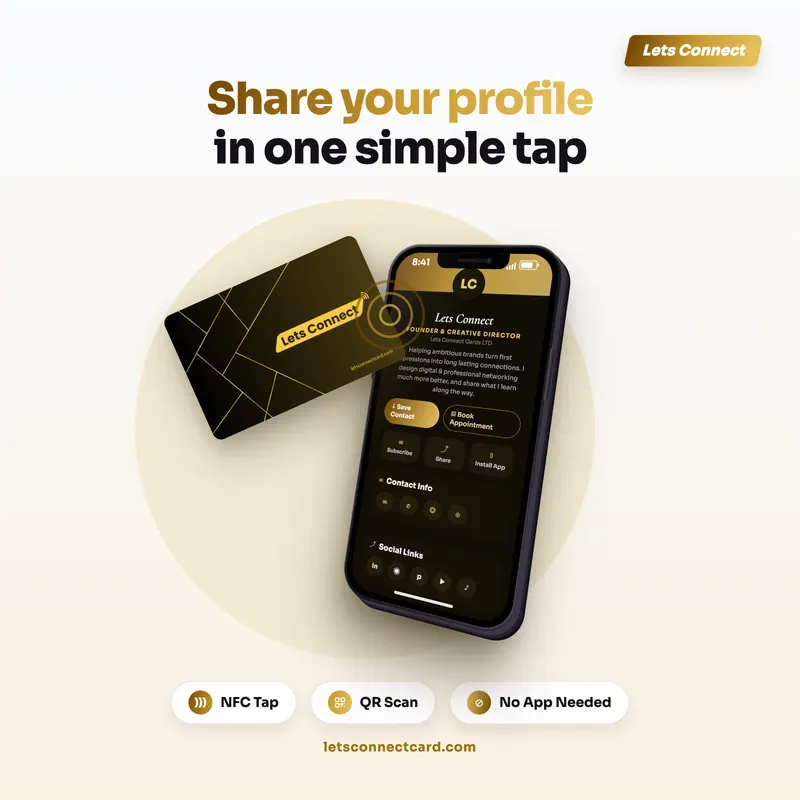
If your card has an NFC chip or a QR code, tap and scan it yourself before the meeting. Make sure your profile is up to date. The other person may open it while you are still in the room.
During the meeting
3. Offer a card when there is a reason
The best moment is when the conversation has given the other person a reason to contact you: a follow-up, an introduction or a question you will answer later. Offering a card at that point feels natural. Offering one before you have said hello can feel like a sales pitch.
4. Hand it over face up
Hold the card so the text faces the other person and they can read it straight away. In many countries it is polite to use two hands, or your right hand. Pause for a moment so they can take it, rather than dropping it in their hand.
5. Say who you are as you hand it over
A short line helps: your name and what you would like them to contact you about. For example, "Here's my card. My email is on there if you want the proposal."
6. Receive a card with attention
When someone gives you a card, take it, look at it and read the name and role. If you are seated, place it on the table in front of you for the rest of the meeting. That shows you value it, and it helps you remember their name.
7. Treat a premium card with care
If someone gives you a metal, bamboo or other distinctive card, hold it by the edges and keep it flat. A short comment, such as "That's a nice card", is a natural compliment. Don't bend it, fold it or put it in a back pocket.
8. Don't write on someone's card in front of them
It can feel as if you are marking up their name. If you need a note, such as where you met or what you promised, write it later in your phone or notebook. If their card opens a profile, save their contact there.
At events
9. Be selective
At a conference or trade show, it is tempting to hand a card to everyone. A card given after a real conversation is far more likely to lead to something. Ask for their card too, so the follow-up is in your hands.
10. Let people tap or scan
Some people will prefer to tap your card with their phone or scan its QR code rather than keep the card. That is fine. They have your details either way, and you keep your card for the next person.
On video calls
Cards can't be handed over on a video call, but the same courtesy applies. Share your profile link in the chat when there is a reason to stay in touch, not at the start. If your card has a QR code, you can hold it up to the camera. Many people find a link easier. The profile is the same either way.
After the meeting
11. Follow up within a day
Send a short message within a day while the meeting is fresh. Mention where you met and one thing you discussed. Keep it brief and add the next step if there is one.
12. When your details change, change the profile
A printed card can't change. Your profile can. Every card here opens an online profile you edit yourself, so a new phone number, email or website reaches everyone who already has your card. The printed name and role stay the same, so keep them short and stable.
Common mistakes
- Running out. Carry a few clean cards to every meeting and event.
- Handing over a damaged card. Replace cards that are bent or marked.
- Reading your own card out. Hand it over and let it speak for itself.
- Forgetting the follow-up. A card without a message afterwards is easy to forget.
- Out-of-date details. A card that opens a stale profile undoes a good meeting.
Interviews
Interviews are a special case. Many candidates don't hand out cards at all, and that is fine. If you have one, a good moment is the end, when the interviewer says to get in touch or asks how to reach you. Don't open with your card or hand one to each panel member unasked. If you are a freelancer or consultant, a card that opens a profile with your portfolio is useful to leave behind.
Cards at different levels
In formal settings, cards are often exchanged in order of seniority: the most senior people first. Our guide to executive name cards covers what senior people usually put on their card and profile. In relaxed settings, order matters less than timing.
The card itself
Etiquette is easier when the card is easy to read. A name, a role, a logo and a clear way to get in touch. Every card in our name cards range is 85.6 × 54 mm, has an NTAG215 NFC chip and a printed QR code, and opens a profile you edit at any time. Our standard name card size guide explains why that size fits wallets and card holders.
Frequently asked questions
When should I give someone my name card?
When the conversation has given them a reason to contact you, often near the end of a meeting. Avoid handing one over before you have spoken.
Should I hand over a card with one hand or two?
Two hands, or your right hand, is polite in many countries and never rude anywhere. Hold the card so the text faces the other person.
Is it rude to write on someone's name card?
Writing on it in front of them can be. Make notes later in your phone or notebook instead.
How soon should I follow up after getting a card?
Within a day, with a short message that mentions where you met and one thing you discussed.
What should I do if my details change?
Update your profile. The card opens it, so everyone who already has your card sees the new details. Don't cross out and handwrite on printed cards.
Should I give a name card at an interview?
Only if it fits, usually at the end when you are asked how to stay in touch. It isn't expected at most interviews.
What if someone gives me a card and I don't have one?
Thank them, read the card, and offer to send your details. Tapping their card or scanning its QR code, if it has one, saves their details on your phone.
Keep reading
Browse all guides, read name card etiquette by country and executive name cards, or see every name card.