Executive Business Cards for CEOs, Founders and Directors
By Business Cards Store Editorial Team | Published | Updated | By role
An executive's card is handed over at moments that matter: an investor meeting, a partner introduction, a board dinner. It should look considered, say little and lead to something useful. This guide covers material, title wording, the profile behind the card and how to keep a leadership team consistent.
What makes an executive card different
An executive card is usually handed over one at a time, at meetings where the first impression matters. It also tends to be kept, passed to colleagues and opened later. So three things matter more than usual.
- Restraint. A name, a title and a logo. Nothing else needs to be printed.
- Accuracy. Wrong details on a senior person's card reflect on the whole company.
- The follow-up route. People often want to reach an executive through an assistant or an office, not directly. The profile can make that clear.
Choosing a material
Every card here is 85.6 × 54 mm with an NTAG215 NFC chip and a printed QR code, and opens a profile you edit yourself. The material changes the impression.
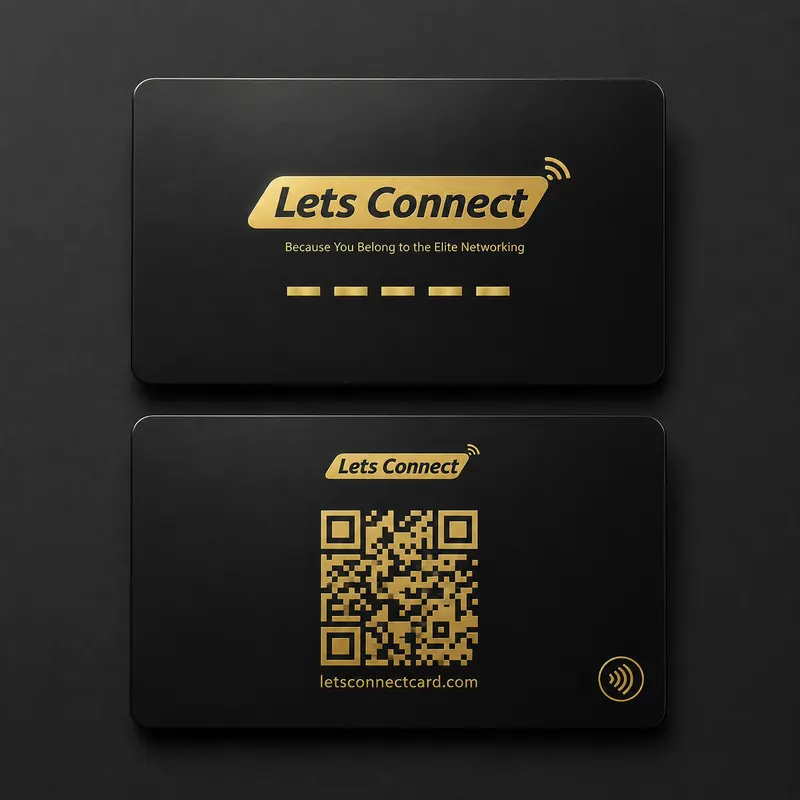
- Metal, in Black & Gold or Black & Silver, is the most formal choice; the premium business cards guide explains when it is worth it. It suits first meetings with investors, clients and partners. Our guide to metal business cards compares the two colourways.
- Bamboo, in White bamboo or Original bamboo, suits founders and leaders of natural, hospitality or design-led brands. It looks warm and crafted rather than corporate.
- PVC, in Black, Green, Brown or Blue, is a smart everyday option and often the choice for the wider team.
In the UK, PVC with the Brand Presence plan is from £49, bamboo from £99 and metal from £149.
Metal or bamboo? Ask what your company looks like in person. A firm with formal offices, a dark brand and a traditional client base usually suits metal. A business with a natural, crafted or hospitality feel usually suits bamboo. If you are unsure, compare the photos on the card page with your website and office. The card should look as if it belongs there.By role
| Role | Suggested material | What to put on the profile |
|---|---|---|
| CEO | Metal | Assistant contact, company overview, investor or press links |
| Founder | Metal or bamboo | Company story, product links, a short bio, booking link |
| Managing director | Metal | Assistant or office contact, company links, LinkedIn |
| Executive or director | Metal or PVC | Direct email, team or department contact, LinkedIn |
| Chair or board member | Metal | Office contact, short bio, company links |
These are common choices, not rules. A founder of a playful consumer brand might choose Green PVC; a CEO of a natural products company might choose Original bamboo.
We also have pages for the CEO business card, the executive business card and the founder business card, each with the same materials and options.
Title wording
Executive titles are often long. On a card the size of a bank card, shorter is better.
- Use the common form. "CEO" is clearer than "Chief Executive Officer" on a small card, and widely understood.
- Combine only if both matter. "Founder & CEO" works; three titles don't.
- Match local usage. In the UK, "Managing Director" is common; in the US, "President" or "CEO" may be used instead.
- Keep it stable. Printed titles can't change after printing. If your title is likely to change, choose a stable form and put the precise one on your profile.
- Include academic titles where expected. In Germany, for example, Dr. is commonly shown.
Your name and title are printed. Check them on the digital proof we send after checkout. Production starts only after you approve it.
What to show on the profile
The profile is where an executive card does its work. People open it after the meeting. Every card opens an online profile you edit at any time.
Worth showing:- An assistant or office contact. Name, email and phone of the person who manages your diary, so people know who to contact for meetings.
- A direct work email, if you are happy to receive messages directly.
- Company links: website, LinkedIn page, press or investor pages.
- A short bio. Two or three lines on your role and background.
- Documents, such as a company overview, if you share one often.
- A booking link, if meetings are booked through a calendar.
- A personal mobile number, unless you want it widely shared.
- A home address or personal social accounts.
- Out-of-date links, old roles and expired offers.
Because you can edit the profile at any time, you can change what is shown after a role change, a fundraise or a new assistant, without reprinting.
What the card itself shows
Print as little as possible: your name, your title, your company logo. The Add Logo add-on, £20 in the UK, prints your logo on the standard layout. If your company has a designed card, the Fully Custom Design add-on, £30 in the UK, lets you upload front and back artwork. The Remove LC branding add-on, £20 in the UK, takes the platform partner's mark off, so only your company's mark remains. Many executives choose it.
When the title changes
Executive titles change: a promotion, a new company, a change from founder to chair. The printed title can't change, so order a new card when it does. Everything else, such as your email, assistant, links and bio, can be updated on the profile straight away.
For founders
Founders often do everything at once: fundraising, hiring and sales. A founder's profile can carry a short company story, product links and a booking link for meetings. Choose a material that suits the brand. Metal reads as formal; bamboo reads as natural and crafted.
Team consistency
A leadership team's cards should look like one set.
- One layout. The same logo position and the same design for everyone.
- One title style. "CEO", "CFO", "COO" rather than a mix of long and short forms.
- Materials by role. For example, metal for the leadership team and PVC for everyone else. Black PVC sits comfortably beside both metal colourways.
- Every profile filled in. An empty profile undoes a good card.
Each person gets their own card and profile, in the same basket. For a large team, contact us before you order. We reply within 48 hours.
Etiquette for executives
In formal settings, senior people often exchange cards first. Hand your card over face up, with the text towards the other person, and take a moment to read any card you receive. Our guide to business card etiquette covers the rest.
Any delivery charge is shown at checkout before you pay, and timing is confirmed after you order. Personalised cards are excluded from change-of-mind returns; faulty cards are covered by our Refund & Returns policy.
Frequently asked questions
What material should a CEO choose?
Metal is the most common choice for first meetings, in Black & Gold or Black & Silver. Bamboo suits founders of natural or design-led brands.
Should I put my assistant's details on my card?
Put them on the profile rather than the printed card. People open the profile after the meeting, and you can change it if your assistant changes.
Should I write "CEO" or "Chief Executive Officer"?
"CEO" is clearer on a small card and widely understood.
Should my personal mobile be on my profile?
Only if you want it widely shared. Many executives show an assistant or office number instead.
Can the leadership team have metal and the rest of the company PVC?
Yes. Put every card in one basket, each with its own material, colour, name and title.
Can I remove the platform branding?
Yes. The Remove LC branding add-on takes the platform partner's mark off the card.
Is bamboo appropriate for an executive?
Yes, if it suits the brand. Leaders of natural, hospitality or design-led businesses often choose bamboo.
Keep reading
Browse all guides, read about metal business cards and business card etiquette, or see the executive business card.